Free printable · Numbers & maths
Compare Numbers 1–20
Count the quantities before choosing the comparison sign.
Download free PDF 16 pagesA4 PDF · 0.3 MB · No sign-up needed
A good starting pointFor children familiar with quantities and written numbers to twenty. Begin within ten if needed. Age is a guide; choose tasks by readiness.
A comparison sign has meaning only when the child understands the values on either side. These pages begin with quantity models, then connect them to numerals and the signs <, > and =.
The pack also turns comparisons around and orders groups of numbers. This helps children read a complete comparison rather than memorise a sign in isolation. Equal values appear alongside greater and smaller quantities.
Open the pack
What’s inside the PDF
- Ten guided focus pages with six activities each.
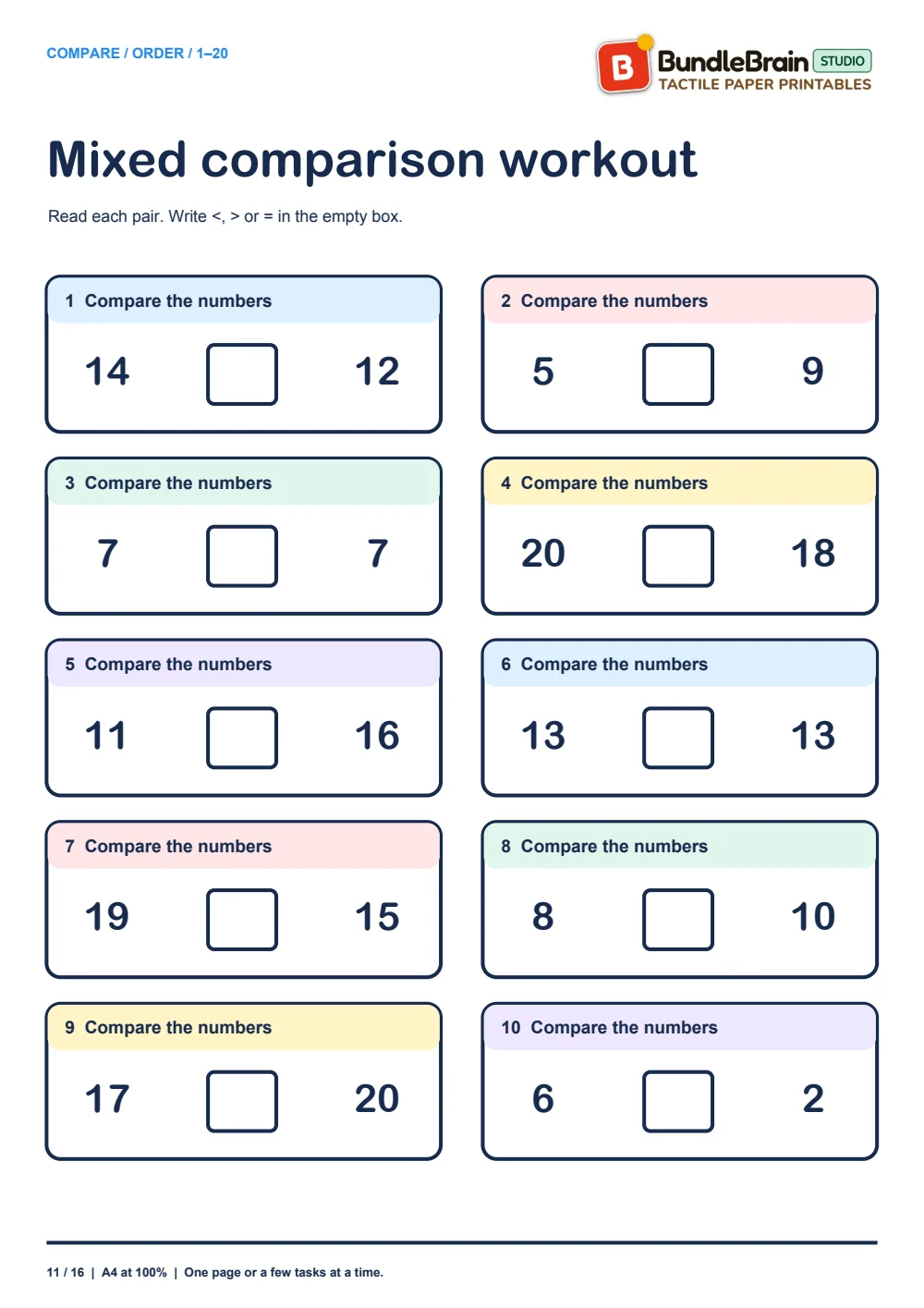
- Mixed comparison practice and six smallest-to-largest ordering rows.
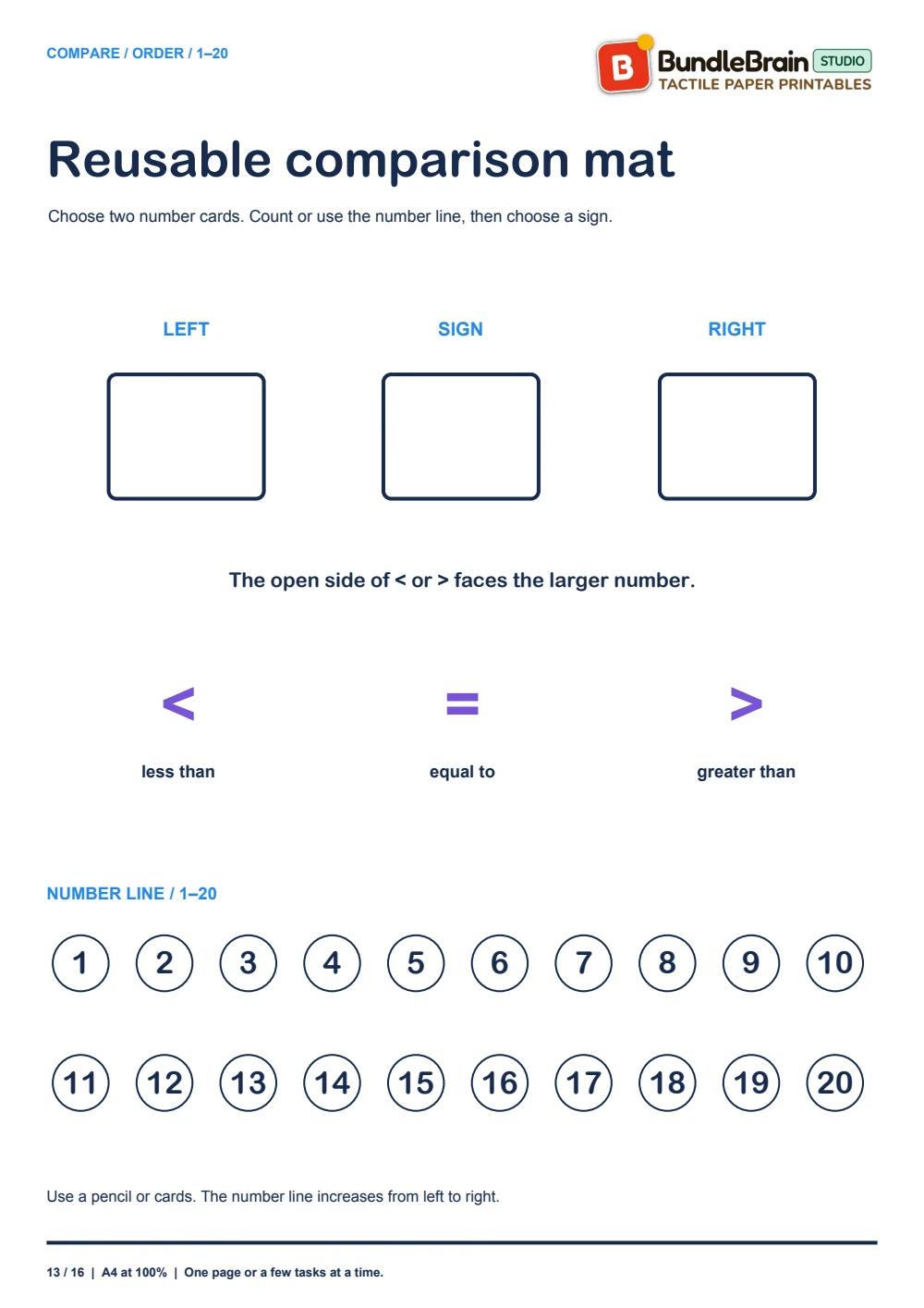
- A reusable comparison mat, twenty number cards and three sign cards.
- A grown-up guide and every answer: 16 A4 pages in total.
Try it together
How to use this activity
Count each quantity
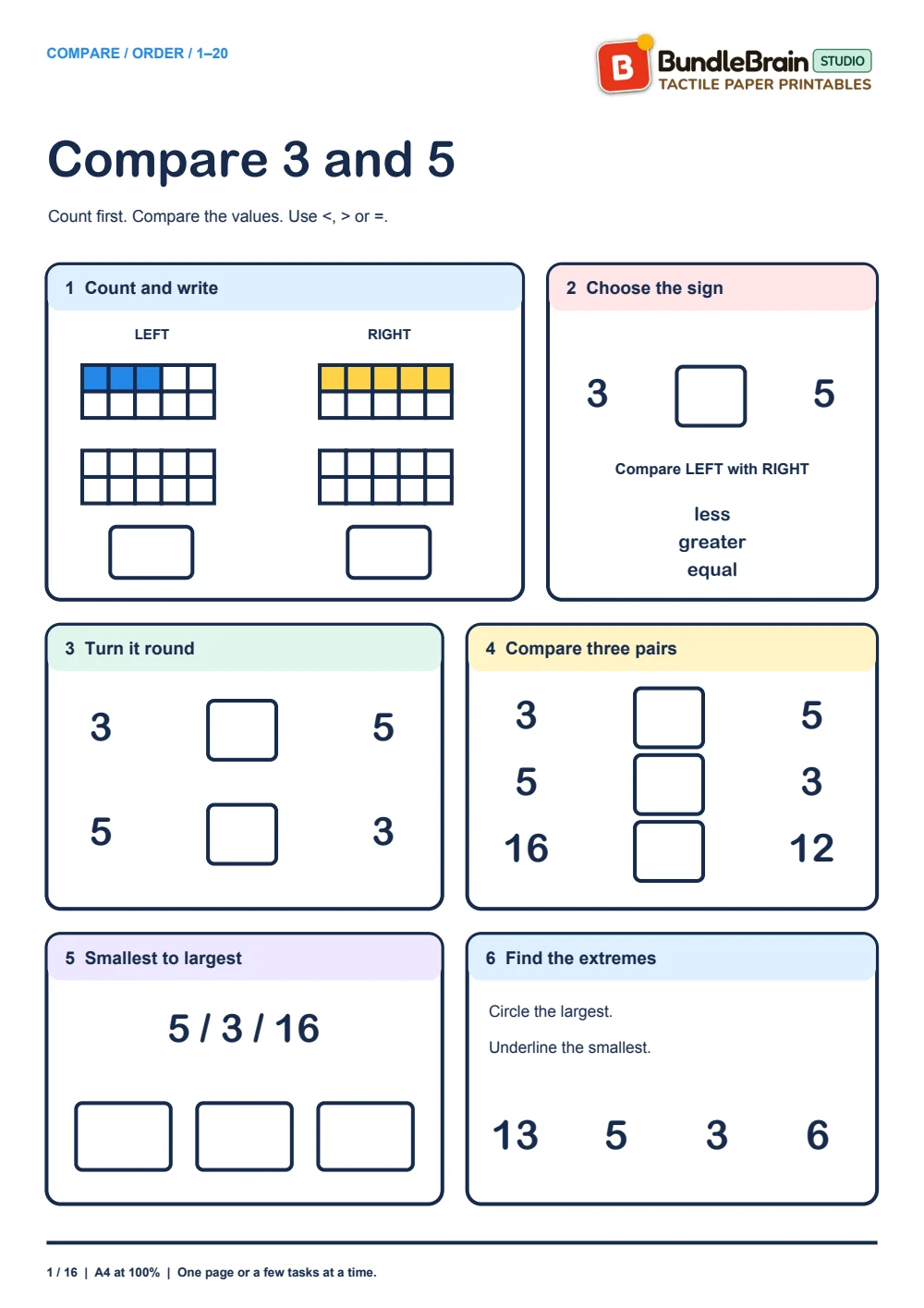
Count the filled ten-frame spaces on the left and right. Name both values before choosing a sign.
Read the relationship
Say 'three is less than five'. Show that the open side of the comparison sign faces the greater value. Use = when both values are the same.
Turn the comparison around
Swap the number positions and read again. Five is greater than three, so the sign changes direction even though the two values remain the same.
Order and review
Arrange a small row from smallest to largest. Later use the mixed pages or draw two cards for a fresh comparison on the mat.
Make it fit your child
A gentler start
Use values 1–10 and real counters. Compare the two groups verbally before introducing written symbols.
Ready for another step?
Make two comparisons using the same numbers in opposite orders. Explain why the sign changes, then try an equal pair.
Look before you print
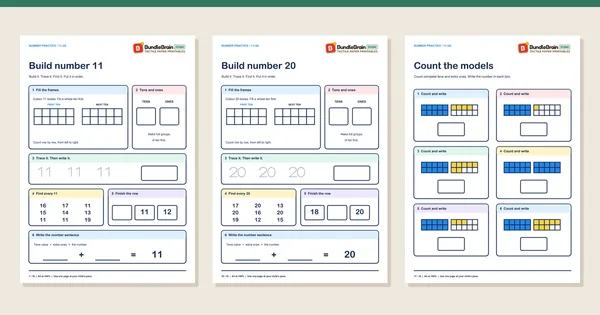
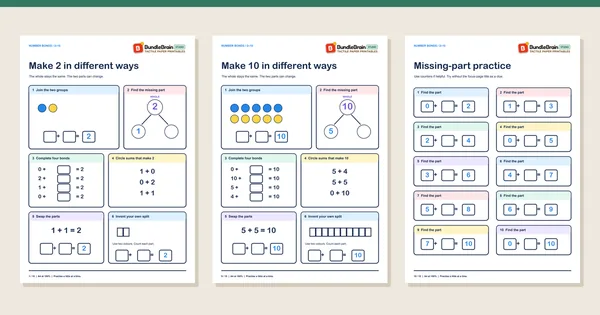
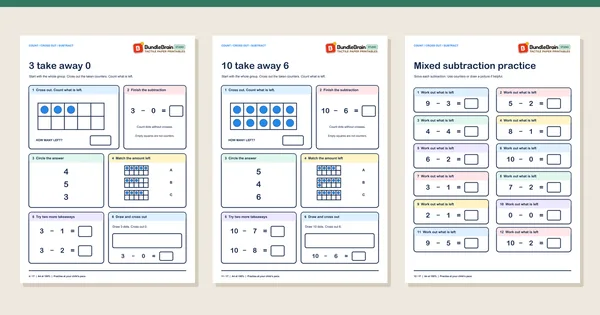
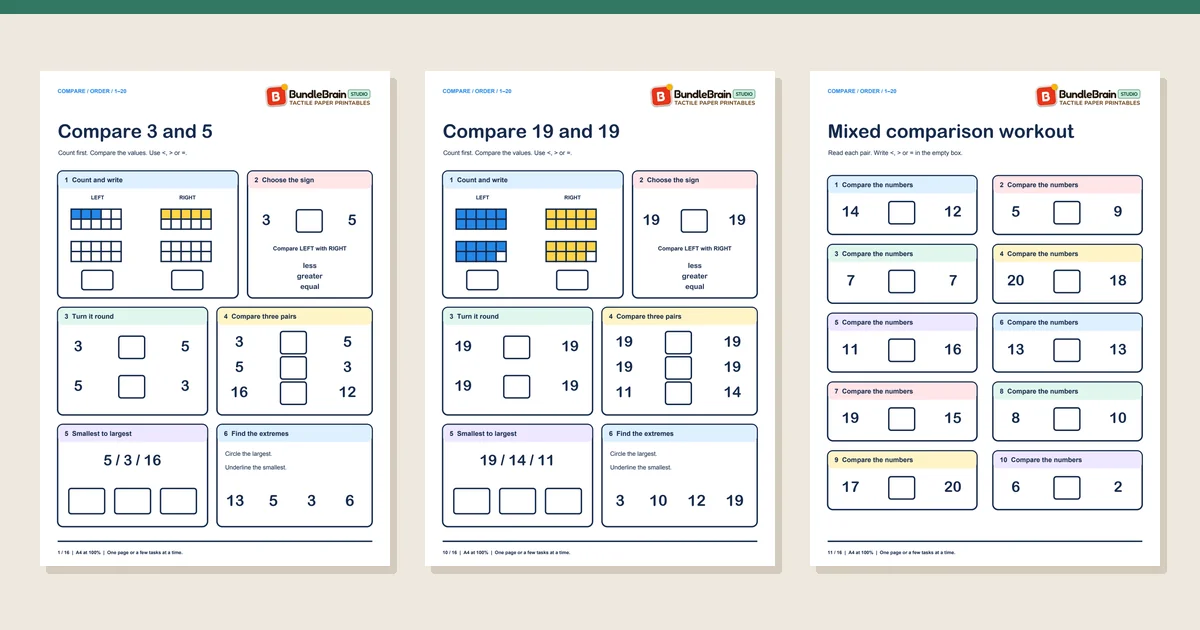
Actual pages from the pack
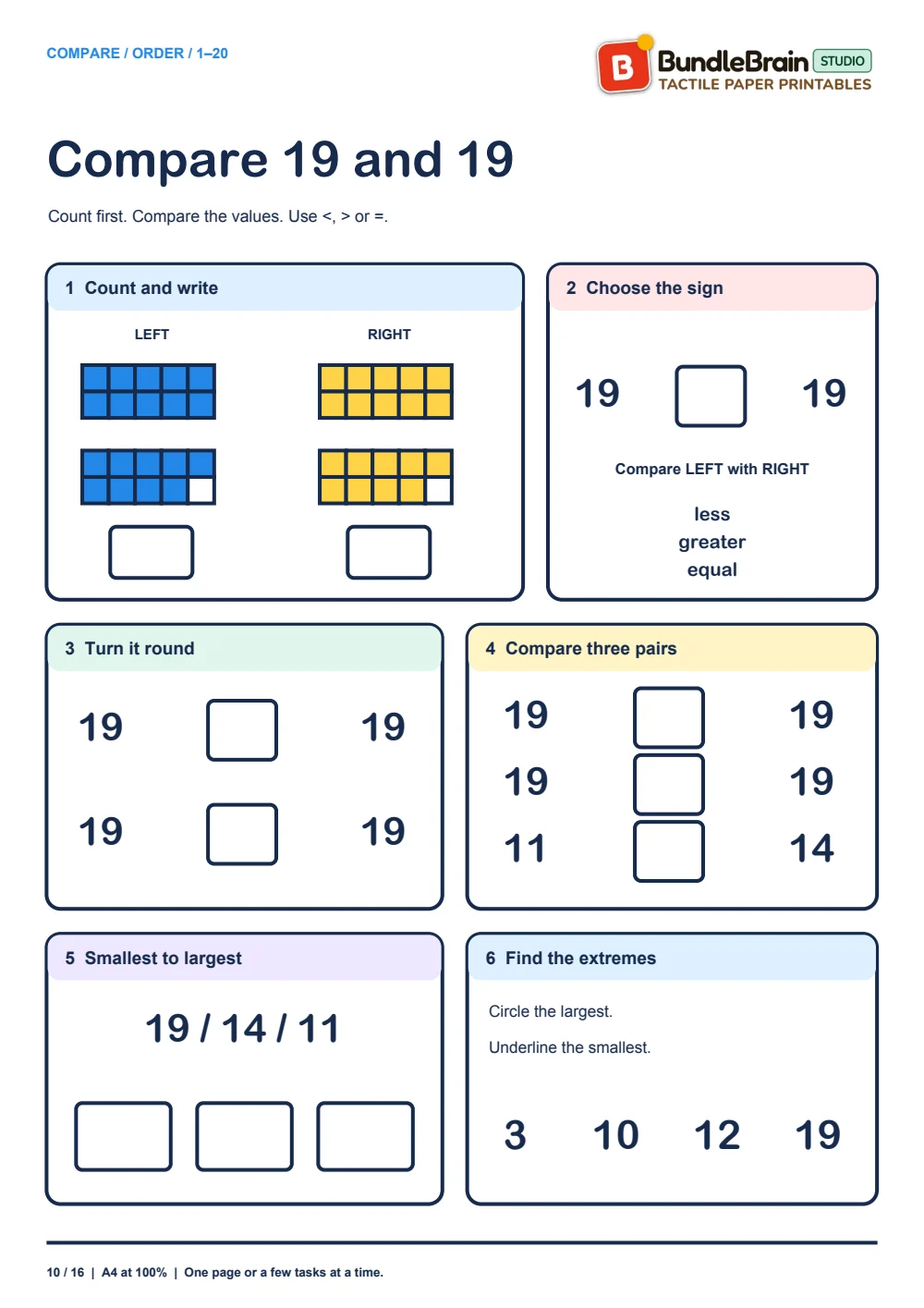
A selection from the 16-page PDF.
Open a page to see it larger.
Paper, pencil, ready
Printing and using the pages
Download the PDF, open it in a PDF viewer and choose A4 paper at 100% or “actual size”. Print only the pages you want to use. Check the preview before printing; keep colour cues visible when a selected task depends on them.
Regular paper works for the worksheets. For reusable loose cards, light card can be easier to handle if your printer supports it. Keep any cutout pieces at the printed scale so they fit their mat. A grown-up should handle preparation and cutting.
These original BundleBrain pages are free for personal and classroom use. Share a link to this activity page so other families can find the instructions and download their own copy. Please do not resell or re-upload the PDF.
Good to know
A couple of questions
Does the pack include equal comparisons?
Yes. Three focus pages show equal groups, including 19 and 19. The mixed tasks also practise choosing among the three signs.
Can we use it before teen numbers are secure?
Start with the smaller values and physical groups. Use Build Numbers 11–20 before expecting confident comparisons across the whole range.
Your next little learning moment
Ready to try Compare Numbers 1–20?
Print a page, sit together and start small.
Free PDF · 0.3 MB · No account needed